Environmental Site Assessments
ALC’s Environmental Site Assessments (ESA) are completed in general conformance with the scope and limitations of ASTM International Practice E1527-21 and the provisions of the U.S. Environmental Protection Agency’s “All Appropriate Inquiry” Final Rule (40 C.F.R. Part 312). ESAs are often required by financial lending institutions before backing a commercial loan and help establish an “innocent landowner defense” under the Superfund Amendments and Reauthorization Act of 1986.
For over 25 years, ALC has provided ESAs to lenders, banks, financial institutions, and developers across the continental United States. Our experience spans multi-family, healthcare, industrial, commercial/retail, public, university, and undeveloped properties.
Phase I
Our Phase I Environmental Site Assessments include, but are not limited to:
- Physical inspection of the site and contiguous properties to evaluate the likelihood of contaminant releases
- Environmental database searches and state file reviews to determine regulatory history
- Historical review of maps and aerial photographs
- Geologic and hydrologic assessment using published data
- Preparation of a comprehensive report with conclusions and recommendations, including next steps or clearance of environmental liability
- Quality assurance and quality control review
ALC also conducts Transaction Screen Assessments in accordance with ASTM E 1528-22 and Property Condition Assessments in accordance with ASTM E 2018-26.
Get In Touch With Our Team
We’re here to help you navigate environmental compliance, testing, and remediation with confidence. Reach out today to speak with an expert.
Phase II
Based on Phase I findings, ALC may evaluate Recognized Environmental Conditions (RECs) and prepare a Phase II Environmental Site Investigation (ESI) work plan in accordance with applicable state and regulatory guidelines.
For instance, if a project is in New York City, the Limited Phase II investigation will be performed in general conformance with New York State Department of Environmental Conservation (NYSDEC) Technical Guidance for Site Investigation and Remediation DER-10 and the City Environmental Quality Review Technical Manual (December 2021). However, if the project is in New Jersey, the guidelines of the NJDEP must be followed and all investigations must be conducted by a licensed site remediation professional (LSRP). These are just two examples of the expertise and experience required to navigate the specific guidelines applicable in each state.
Our Phase II process includes:
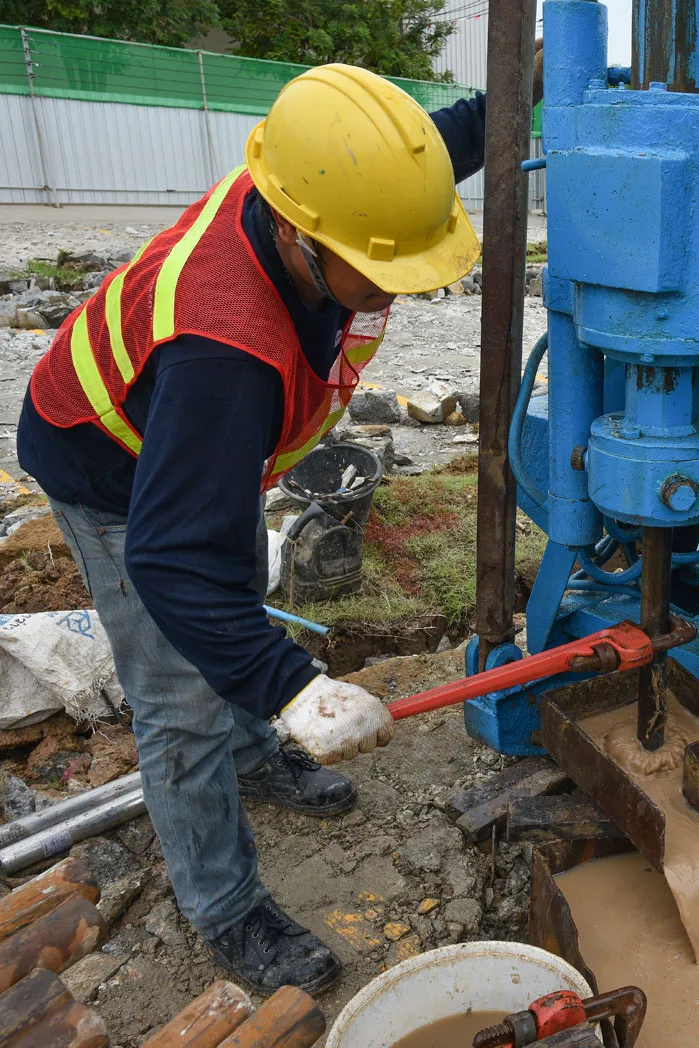
- Soil and groundwater testing
- Asbestos, mold, lead-based paint, dust sampling, and tank testing
- Laboratory analysis by certified independent laboratories
- Ground penetrating radar surveys
- Risk-Based Corrective Action (RBCA) modeling
- Comprehensive data review and regulatory-compliant reporting
- Data reduction and QA/QC review with recommendations for future action
We help you manage your environmental issues with a keen eye on your budget
Phase III
If the findings from the Phase II ESA indicate that contamination of a site is prevalent, ALC
Environmental can offer the services of a Phase III Environmental Assessment which determines the nature and extent of contamination and the potential risk to human health, steps which are integral in developing a Remedial Action Plan (Phase IV ESA).
Our Phase III ESA includes:
- Classification and delineation of the detected materials in accordance with local, state, and federal codes, rules, and regulations for disposal
- Calculate the volume of impacted soil and/or groundwater
- Investigate pathways of migration of contaminants through soil and groundwater
- Notification of the appropriate regulatory body as required
- Determine site-specific remedial goals determined through a quantitative risk assessment model
- Development of feasible remediation options that include time frames and costs. These options will also consider physical/chemical limitations, construction requirements, environmental and health safety implications, regulatory approval, and public perception
- Limited Environmental Due Diligence: Transaction Screen Process (standards established under ASTM E 1528-06)
We communicate your findings in real-time, so you avoid unnecessary surprises and delays

Environmental Due Diligence for Multi-State Real Estate Portfolio Transactions
ALC conducted Phase I and Phase II ESAs to evaluate environmental conditions and regulatory considerations for properties supporting real estate transactions across New York…